Welcome to the AI in Education Lab@HKU
Where Research Meets Transformation
Research and redefine education with us
Welcome to the AI in Education Lab
Research and redefine education with us
Welcome to the AI in Education Lab at the University of Hong Kong, a hub for exploring how artificial intelligence can transform education responsibly and meaningfully. Our mission is to empower educators, students, and institutions with innovative tools, evidence-based research, and actionable insights that address the challenges and opportunities AI brings to teaching, learning, and assessment.
Our research focuses on key areas such as advancing AI literacy, integrating AI into pedagogy and assessment, and examining critical issues like AI-related plagiarism ("AI-giarism"), AI guilt, and the perceptions of students and teachers toward generative AI in education. Through a strong foundation of published works and collaborations, we aim to lead the way in ensuring that AI is used ethically and effectively across all educational levels—from primary to post-secondary
Beyond research, the Lab is dedicated to creating practical AI solutions tailored to educational development and research. We develop generative AI applications designed to enhance learning experiences, support assessment practices, and drive evidence-based educational innovation. These tools are crafted with a focus on accessibility, usability, and ethical implementation, ensuring they meet the diverse needs of educators and learners worldwide.


1

2

3

5
AI Technology and Development
Our lab focuses on developing innovative AI models using open-source large language models (LLMs) to transform education. Key projects include the SuperTA, an app designed to support educators with question generation for tests, quizzes, exams, and other assessment-related tasks. Additionally, our lab has also developed the AI Chatbot with Avatars app, which provides interactive, personalised learning experiences. These tools enable the enhancement of teaching and learning, fostering efficiency and customisation in education.

6

7
AI Courses for Teacher Professional Development
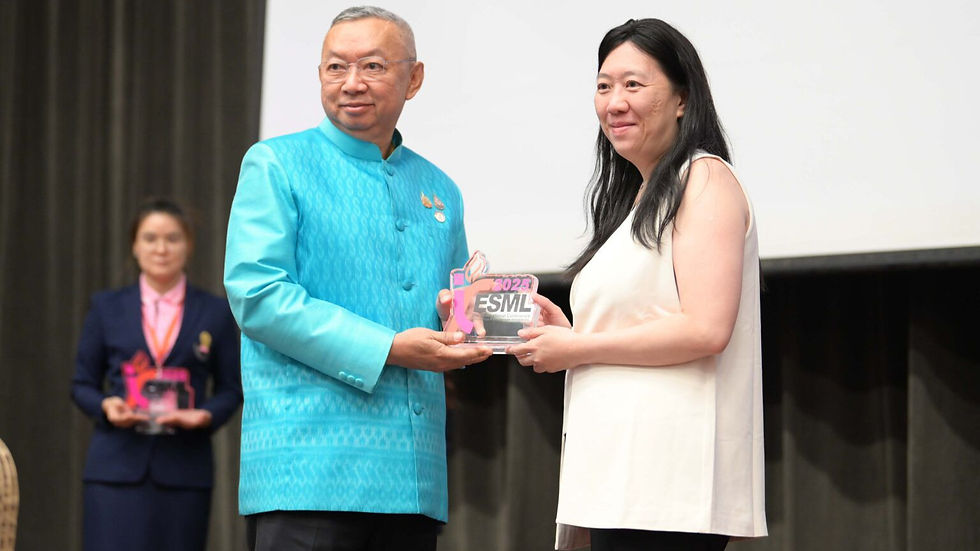
Our team, led by Professor Chan, develops professional development courses to help teachers integrate AI into teaching, learning, and assessment. Numerous schools and institutions have already adopted our AI literacy courses. Our upcoming STEAM-focused course, developed in partnership with industries and international organisations, offers hands-on training with subject-specific AI tools to foster innovative teaching practices.

Professor Cecilia Chan is a Professor in Education and was the Founding Director of the Teaching and Learning Innovation Centre at the University of Hong Kong (HKU). Professor Chan has a dual disciplinary background in Education and Engineering, and is the President of Asian Society for Engineering Education. With a dual disciplinary background in Education and Engineering, her research focuses on developing and assessing competencies, experiential learning, and the integration of artificial intelligence (AI) in education.
A Principal Fellow of the UK Higher Education Academy (HEA), Professor Chan also recently received the UGC Excellence Teaching Team Award (2024).
Prof. Cecilia K Y Chan
Chief Investigator

Prof. Cecilia K Y Chan
Director of TALIC Center
Our Team

Dr. Katherine Lee
Post Doctorate Fellow
Manager of the AI in Education Lab

Dr. Hannah Wong
Post Doctorate Fellow
_

Mr. Alan Poon
Head of the IT Team
_

Mr. Kepan Cao
AI Developer
_

Ms. Louisa Tse
Postgraduate Student
_

Ms. Wenjie Hu
Postgraduate Student
_

Ms. Xiaohan Lin
Research Assistant
_

Ms. Cindy Mok
Postgraduate Student (EdD)
_

Mr. Eddie Chu
IT Attendent
_

Dr. Ying Su
Post Doctorate Fellow
_

Ms. Wei Dai (Davina)
Research Assistant
_

Mr. Yi Zhao (Adonis)
Research Assistant
_

Ms. Cailing Gao
Research Assistant
_

75
International Collaborators

100
Industry Partners

87
Local Schools and University Partners
15
Publications on AI

25
Ongoing Research Programs